


Adapting to the Unpredictable: Strategies for Resilient Soybean Harvests
Although weather forecasts for the 2024/2025 soybean harvest had already indicated the possibility of periods of low rainfall in Rio Grande do Sul, precipitation remained normal until early January 2025. This allowed for good initial crop development and contributed to the presence of disease inoculum.
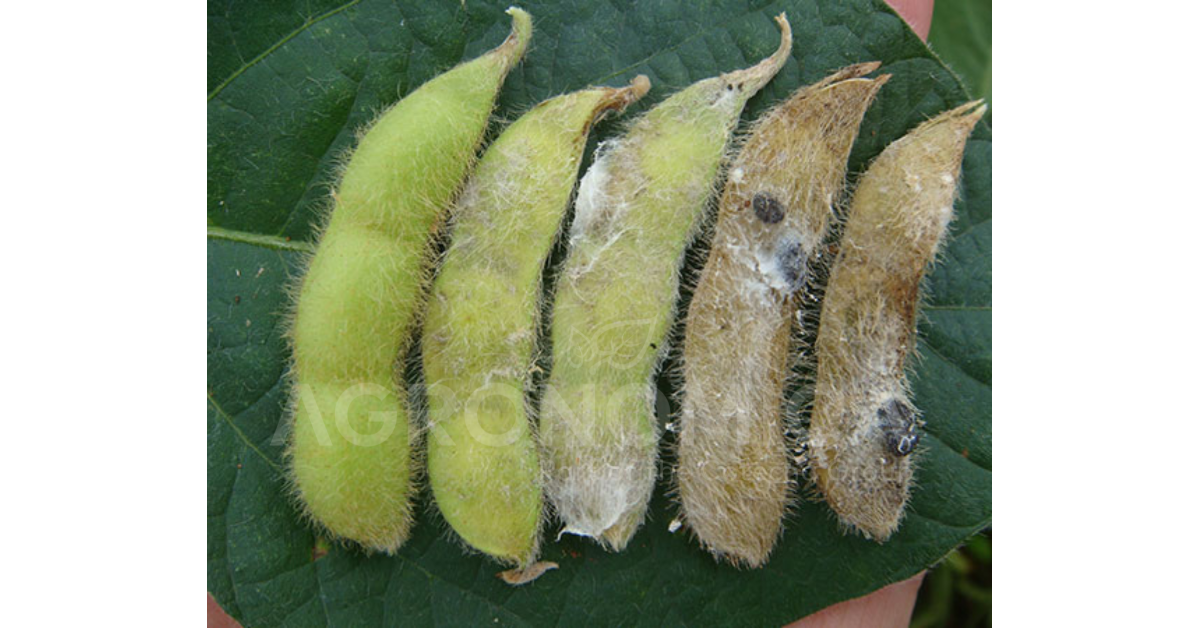
(Analysis of the presence of dormant mycelia and sclerotia in soybean seeds. Source: Agronômica)
For a disease to develop, three factors must be present: a favorable environment, inoculum availability, and plant susceptibility. However, the water deficit and high temperatures observed from January onwards disrupted one of the key components of this triangle: the environment. Without favorable climatic conditions, epidemics struggle to develop. In some regions, the dry spell has exceeded 25 days, significantly affecting not only disease occurrence but also plant development.
Plants under water stress exhibit typical physiological responses, including hormonal imbalances, reduced solubilization, absorption, transport, and assimilation of nutrients, leaf and flower loss, decreased photosynthetic rates, and pod abortion. These factors directly impair the productive potential of crops.
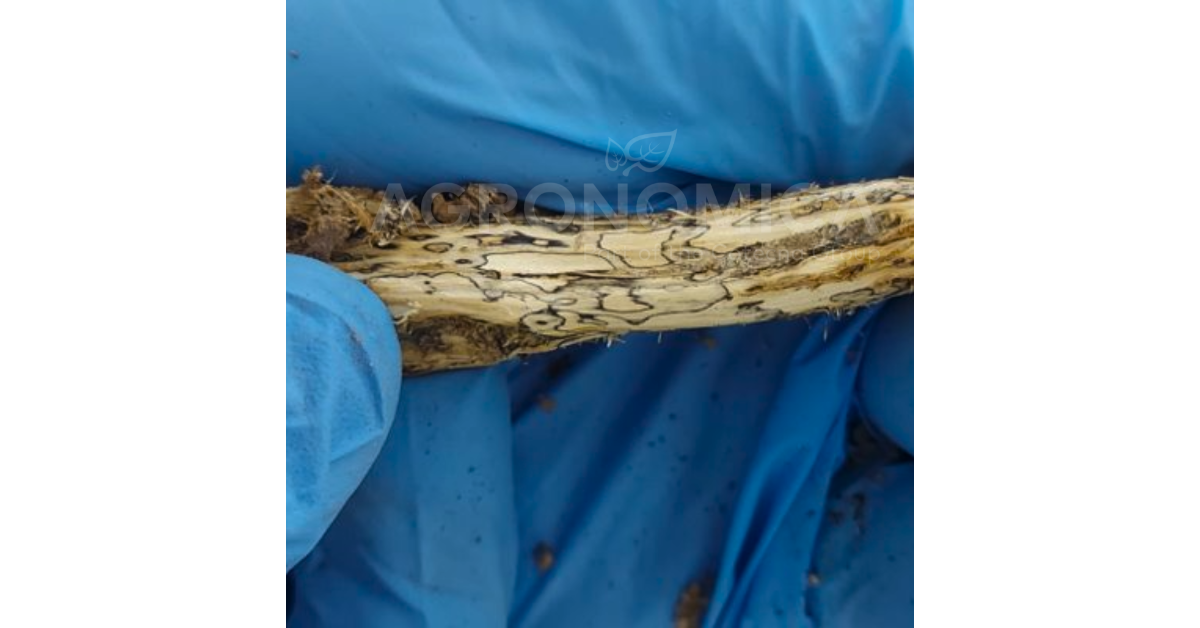
(Detection and identification of Diaporthe species. Source: Agronômica)
In drought scenarios, it is common for producers to adjust phytosanitary management practices, delaying or extending intervals between fungicide applications. However, it is crucial that decisions are based on the productive potential of each field, which can vary significantly depending on the region, sowing time, and cultivar cycle. In areas with early sowing or regions experiencing severe water deficits, the damage may be irreversible. Conversely, in regions where rainfall returns, plant growth can resume, once again creating favorable conditions for infections and disease development.
When environmental conditions normalize, latent infections (already established within plants) tend to sporulate, intensifying disease development. Thus, neglecting phytosanitary management during dry periods can significantly compromise control of Asian soybean rust and other diseases throughout the crop cycle.
Strategies to minimize impacts and maximize results
Every harvest presents unique challenges, and success depends on strategies adapted to different scenarios.
Recommended practices include:
- Choosing high-vigor seeds to promote better root development and improve water absorption at greater depths.
- Diversifying cultivars, sowing times, and cycles to reduce exposure to adverse conditions.
- Using crop residue (mulch) to help retain soil moisture and protect against erosion.
- Decompacting the soil and ensuring balanced fertilization to improve water infiltration and nutrient availability.
For disease control, even during periods of low rainfall, it is essential to maintain regular intervals between fungicide applications, prioritize nighttime spraying, and use higher spray volumes. Selecting fungicides with physiological effects, especially those that reduce oxidative stress and the risk of phytotoxicity, can provide additional benefits for plants.
Every adversity brings valuable lessons. It is crucial to continue improving management practices to ensure the sustainability and productivity of crops, regardless of climatic challenges.
Contact us for tailored solutions to maximize your crop's potential.
About Agronômica
AGRONÔMICA is a leading phytosanitary diagnostics laboratory in Brazil, offering integrated solutions that support decision-making by key players in the agricultural sector. We operate in all stages of the agribusiness chain, with services that include the identification of regulated and restrictive pests, by national requirements and international agreements; disease diagnosis and identification of beneficial microorganisms; analysis of biological products and inoculants; efficacy and compatibility testing of chemical and biological pesticides, both under controlled conditions and in the field; as well as physical-chemical and microbiological analyses. All these services are aligned with our commitment to plant health, sector sustainability and the promotion of food security.